This glossary serves to understand some of the concepts related to heat transfer, which were rescued from a reading. It's important to understand these concepts as they refer to more specific aspects related to heat transfer mechanisms, some of the most representative concepts in the glossary are: the heat conduction equation, the boundary conditions to consider to solve problems, among others.
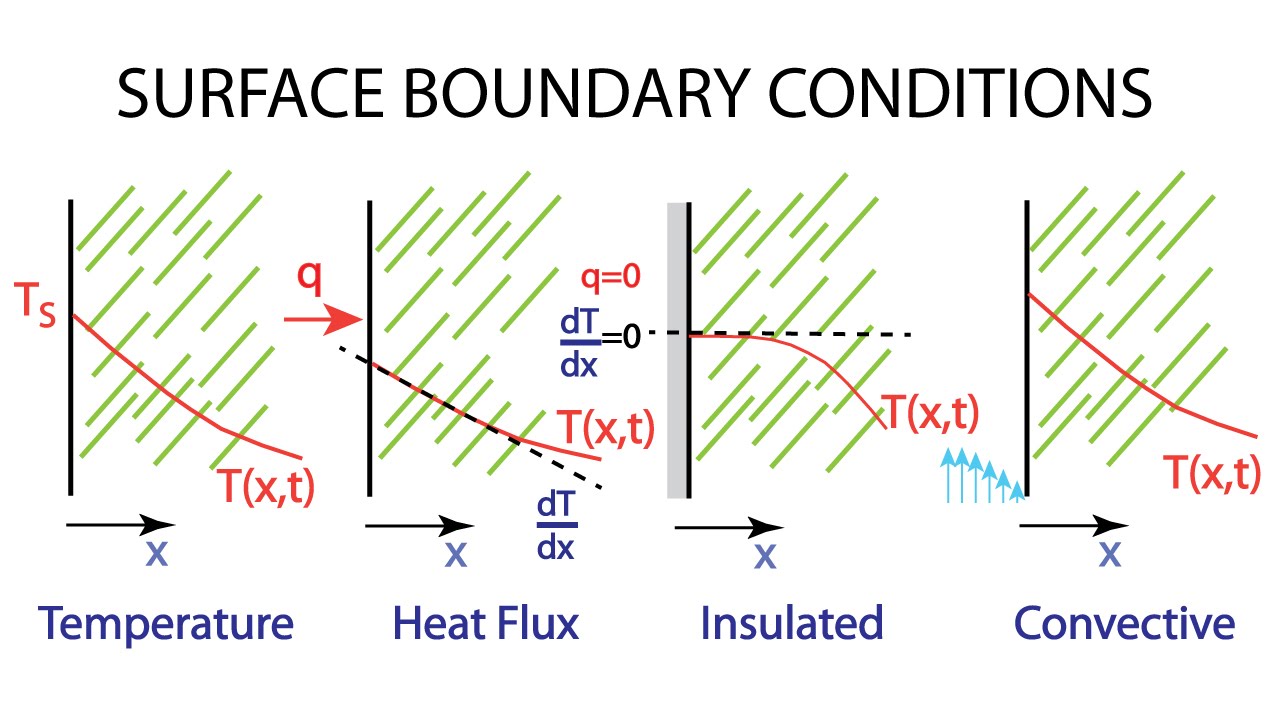
Boundary conditions
Noun.
Boundary conditions are constraints necessary for the solution of a boundary value problem. A boundary value problem is a differential equation (or system of differential equations) to be solved in a domain on whose boundary a set of conditions is known.
Example: BOUNDARY CONDITIONS problems are extremely important as they model a vast amount of phenomena and applications, from solid mechanics to heat transfer, from fluid mechanics to acoustic diffusion.
en: Condiciones de frontera.
Chemical energy
Noun.
Is energy stored in the bonds of chemical compounds, like atoms and molecules. This energy is released when a chemical reaction takes place. Usually, once chemical energy has been released from a substance, that substance is transformed into a completely new substance.
Example: Dry wood contains stored CHEMICAL ENERGY. When you burn that wood in a fireplace, chemical energy is released and converted into thermal energy (heat) and light energy.
en: Energía química.
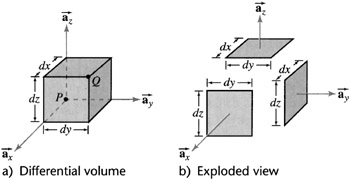
Differential element
Noun.
The differential element or just differential of a quantity refers to an infinitesimal change in said quantity, and is defined as the limit of a change in quantity as the change approaches zero.
Example: The DIFFERENTIAL ELEMENTS are useful in the definitions of derivatives and integrals, which are useful in thermal processes.
en: Elemento diferencial.
Emissivity
Noun.
The relative power of a surface to emit heat by radiation : the ratio of the radiant energy emitted by a surface to that emitted by a blackbody at the same temperature.
Example: Aluminum has an EMISSIVITY coefficient of 0.05.
en: Emisividad.
Energy balance
Noun.
It's a relationship of the energy that enters and leaves a system, that is, it is the study of the energetic changes of a system, normally positive signs are established to indicate the energy that enters and negative signs for the energy that leaves.
Example: An object or a system of objects that contain one form of energy can transform that form into a different one, an ENERGY BALANCE can be made to know the proportions of the change.
en: Balance de energía.
Heat conduction equation
Noun.
The heat conduction equation is a partial differential equation that describes the distribution of heat (or the temperature field) in a given body over time. Detailed knowledge of the temperature field is very important in thermal conduction through materials.
Example: If we consider a plate wall with a uniform and constant heat generation, the heat transfer rate can be determined by means of the HEAT CONDUCTION EQUATION as long as the thermal conductivity of the material is known.
en: Ecuación de conducción de calor.
Heat flux
Noun.
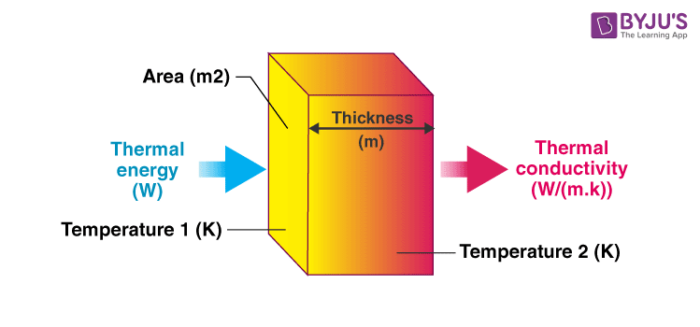
Heat Flux is the rate of heat energy that passes through a surface. Depending on the exact definition of heat flux, its unit can be expressed as either W/m2 or W.
Example: Getting cold feet from standing on a cold floor: since the floor has a lower temperature than the feet, the HEAT FLUX is from the feet to the floor.
en: Flujo de calor.
Insulation
Noun.
It arises when placing materials that have a high thermal resistance: that is, they oppose the flow of heat. A thermal material, therefore, stands as a wall between different media, preventing heat from passing to equalize temperatures, as happens naturally.
Example: Some examples with thermal INSULATION are: expanded cork, expanded polystyrene, glass foam, glass wool.
en: Aislamiento.
Internal energy
Noun.
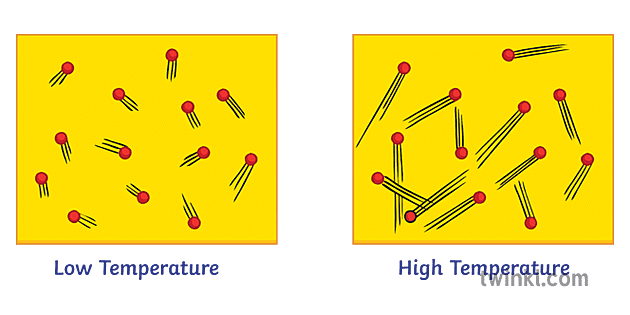
It is the sum of all the microscopic forms of energy, knowing that the microscopic energy are the forms of energy related to the molecular structure of a system and to the degree of molecular activity.
Example: Considering that gases tend to occupy the total volume of the container in which they are contained, since their INTERNAL ENERGY will vary as this amount of space is greater and will increase when it is less.
en: Energía interna.
Nuclear energy
Noun.
Is a form of energy released from the nucleus, the core of atoms, made up of protons and neutrons. This source of energy can be produced in two ways: fission – when nuclei of atoms split into several parts – or fusion – when nuclei fuse together.
Example: The NUCLEAR ENERGY harnessed around the world today to produce electricity is through nuclear fission.
en: Energía nuclear.
One-dimensional heat transfer
Noun.
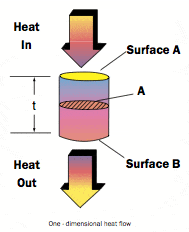
A heat transfer problem is said to be one-dimensional if the temperature in the medium varies in only one direction and, therefore, heat is transferred in that same direction; at the same time, the temperature variation and, as a consequence, the heat transfer in other directions is negligible.
Example: It can be considered that heat is transferred through a concrete wall in a ONE-DIMENSIONAL way, from the internal surface to the external one.
en: Transferencia de calor unidimensional.
Rectangular coordinates
Noun.
The rectangular coordinate system consists of two real number lines that intersect at a right angle. The horizontal number line is called the x-axis, and the vertical number line is called the y-axis. These two number lines define a flat surface called a plane, and each point on this plane is associated with an ordered pair of real numbers (x, y).
Example: RECTANGULAR COORDINATES are also called Cartesian coordinates in honor of René Descartes (1596-1650), the famous French philosopher and mathematician.
en: Coordenadas rectangulares.
Thermal conductivity
Noun.
Thermal conductivity can be defined as the rate at which heat is transferred by conduction through a unit cross-section area of a material, when a temperature gradient exits perpendicular to the area.
Example: The THERMAL CONDUCTIVITY of an insulator such as polyurethane foam is 0.026 W / m · ° C.
en: Conductividad térmica.
Thermal diffusivity
Noun.
It represents how fast heat diffuses through a material and is defined as the ratio of conducted heat over stored heat.
Example: THERMAL DIFFUSIVITY ranges from 0.14 ×10^(-6) m^2 / s for water, to 149 ×10^(-6) m^2 / s for silver, which is a difference of more than a thousand times.
en: Difusividad térmica.
Thermal symmetry
Noun.
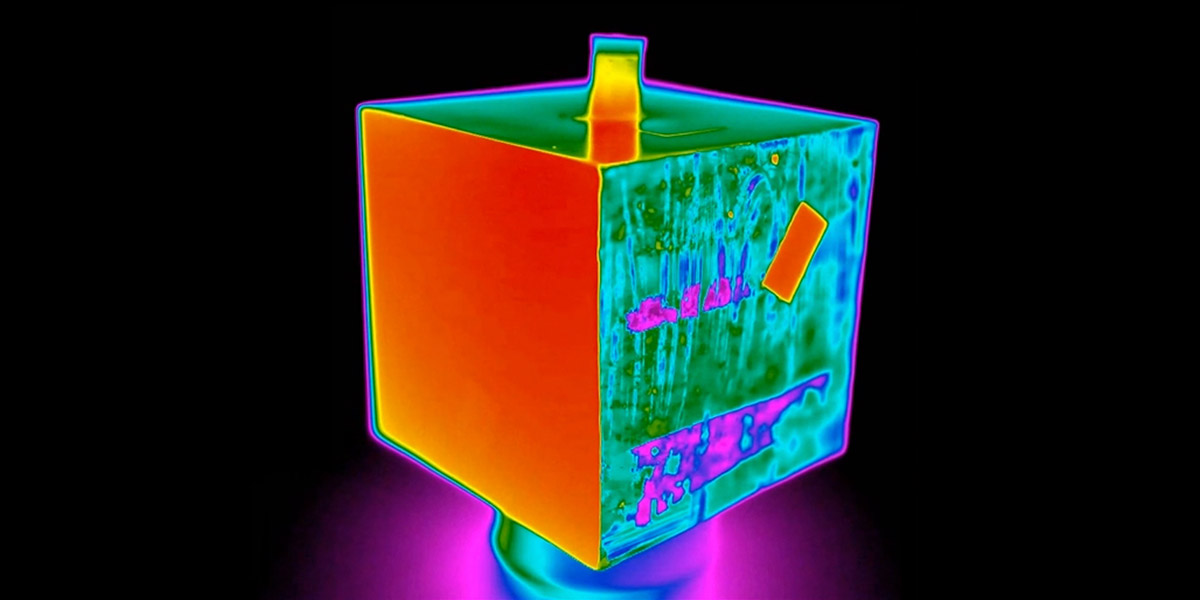
It is when an object or its surfaces have the same thermal conditions and therefore, the temperature distribution between their surfaces is the same.
Example: The surfaces of a large hot plate suspended vertically in the air have THERMAL SYMMETRY because they are subject to the same thermal conditions.